Boiler Repair in Ocean Hill, Brooklyn
Reliable diagnostic, safety testing, and repair solutions for steam and hot-water heating systems in residential row houses, brownstones, and multi-family apartment buildings across Ocean Hill.
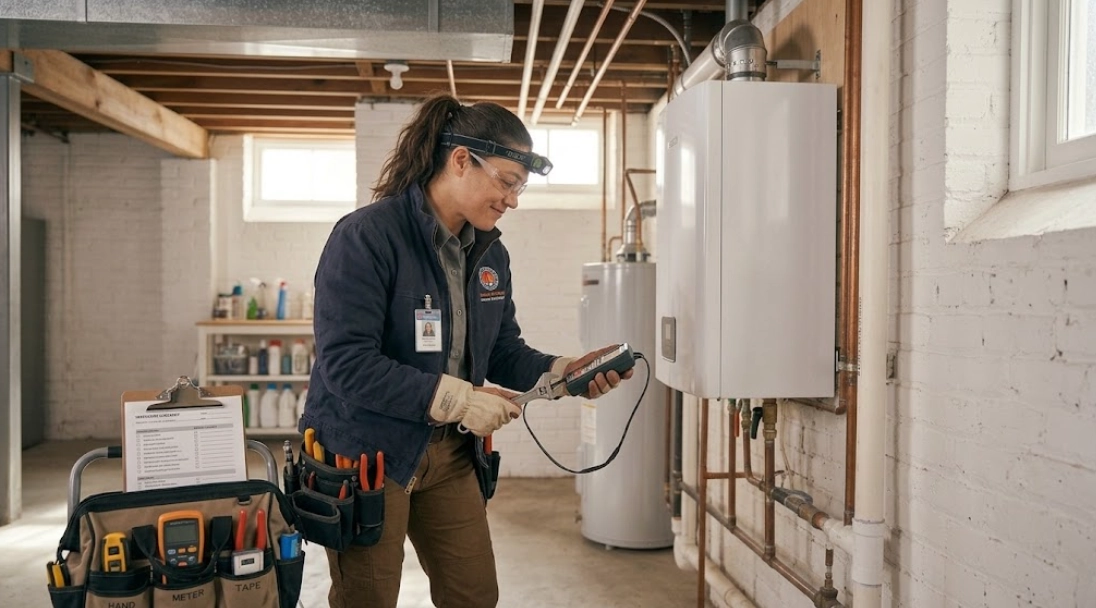
Experiencing a Sudden Loss of Heat or Unusual Boiler Behavior?
If your heating system shuts down during freezing Brooklyn winter weather, prompt technical evaluation prevents frozen water lines, split radiator castings, and uninhabitable living spaces. For urgent situations involving a no heat boiler repair Ocean Hill Brooklyn property owners can call our dispatch team immediately at (315) 202-8009. If you ever smell natural gas or suspect a fuel leak, immediately exit the property and dial 911 or National Grid from outdoors.
Boiler Repair for Ocean Hill Homes and Multi-Family Properties
Understanding the heating challenges unique to Kings County residential architecture.
Ocean Hill contains a distinctive concentration of late nineteenth-century brick row houses, historic brownstones, and two- to six-family multi-story apartment buildings. Many of these residential properties, including homes lining residential avenues near Broadway Junction, Fulton Street, and Atlantic Avenue, rely on centralized boiler rooms located in damp basements or sub-level cellars. In these historic architectures, dependable heat is not just a comfort requirement—it is essential for building structural integrity during deep cold snaps.
When a heating breakdown occurs, identifying the underlying root cause requires an understanding of both modern heating controls and legacy building engineering. A simple component failure, such as a clogged pigtail siphon or a sticking aquastat, can quickly mimic a catastrophic breakdown. Our approach to boiler repair Ocean Hill Brooklyn residents rely on focuses on thorough diagnostics, isolating electrical, mechanical, and distribution issues to restore heat safely without unnecessary disruptions.
Whether your property uses a single-pipe gravity steam heating system or a multi-zone hydronic system, each design requires distinct diagnostic steps. For example, specialized steam boiler repair Ocean Hill Brooklyn properties require meticulous assessment of water chemistry, condensate return lines, and low-water cutoffs. Conversely, modern hot water boiler repair Ocean Hill Brooklyn applications require precise pressure regulation, expansion tank testing, and circulator pump verification.
Steam Boilers vs. Hydronic Hot-Water Systems
How different heating designs function in Ocean Hill buildings.
Steam Boiler Heating Systems
Common in older Brooklyn row houses, steam systems boil water to generate low-pressure steam (typically 0.5 to 2 PSI) that rises through vertical risers to cast-iron radiators. Key failure points include water level fluctuations in the sight glass, sediment buildup in the low-water cutoff, failed automatic water feeders, corroded pressuretrols, and leaking header piping. Proper balancing and condensate return are critical to prevent boiler flooding or dry-firing.
Learn about radiator & steam repairs →Hydronic Hot-Water Boilers
Frequently installed in renovated homes and two-family flats, hydronic systems circulate heated water (typically 160°F to 180°F) through closed loops using electric circulator pumps and fin-tube baseboards or modern panel radiators. Diagnostic concerns center on diaphragm expansion tank failures, airlocks in horizontal piping, seized zone valves, faulty relief valves discharging water, and aquastat high-limit malfunctions.
Explore boiler replacement options →Warning Signs Your Boiler Requires Immediate Inspection
Catching mechanical wear before complete heating failure occurs.
No Heat or Inadequate Warmth
When a boiler fails to fire despite a calling thermostat, common culprits include tripped thermal roll-out switches, failed electronic ignition modules, defective gas valves, or low water levels that trigger safety cutoffs.
Unusual Noises & Banging
Kettling, whistling, or violent knocking inside the boiler vessel points to heavy mineral scale accumulation or steam bubbles trapped inside cast-iron sections due to restricted water flow or localized overheating.
Water Leaks & Pressure Drops
Puddles beneath the boiler often indicate a weeping pressure relief valve, leaking pipe fittings, defective circulator gaskets, or internal cast-iron section fractures that require immediate technical attention.
Frequent System Short-Cycling
A boiler that fires up and shuts off every few minutes strains electrical components, consumes excessive fuel, and usually stems from an oversized firing rate, faulty high-limit controls, or obstructed water circulation.
Discolored Burner Flame
When evaluating a gas boiler repair Ocean Hill Brooklyn technicians inspect the burner flame. A healthy flame burns crisp blue. Yellow, flickering, or rolling flames signal incomplete combustion or soot buildup requiring immediate service.
Repeated Lockout Alerts
Digital control boards displaying intermittent lockouts or diagnostic codes indicate flame sensor fouling, vent damper switch failures, or draft inducer pressure switch errors that prevent safe startup cycles.
Key Boiler Components & Common Failure Points
A technical breakdown of critical safety and operational devices.
Low-Water Cutoffs (LWCO)
The low-water cutoff is the primary defense against dry-firing—a catastrophic event where the burner continues firing without sufficient water, warping or cracking the cast-iron heat exchanger. Float-type cutoffs collect sediment in older Brooklyn piping and must be regularly flushed. Probe-type electronic cutoffs can foul with mineral deposits, causing false low-water shutoffs.
Pressure Relief & Reducing Valves
Safety relief valves are calibrated to open if internal boiler pressure exceeds safe thresholds (typically 15 PSI for residential steam boilers and 30 PSI for hydronic boilers). When a relief valve drips or spews water, it indicates either an over-pressurized vessel caused by a waterlogged expansion tank, a defective pressure reducing valve continuously adding city water, or mechanical failure within the valve seat itself.
Circulator Pumps & Zone Relays
In hydronic hot-water systems, circulators move thermal energy through multi-story buildings. Worn impeller bearings, capacitor failure, or seized motors leave the boiler firing while baseboards and radiators remain stone cold. Testing electrical continuity, amperage draw, and zone valve end-switches isolates why warm water fails to circulate.
Burners, Gas Valves, and Ignition Modules
Modern atmospheric and power-vented gas boilers rely on electronic ignition modules, flame rectification rods, and dual-seat solenoid gas valves. Accumulations of airborne dust, lint, or iron rust scales around burner ports can impede flame propagation, resulting in hard ignition, burner rumble, or safety lockouts.
What to Expect During a Professional Boiler Service Visit
Our structured inspection methodology ensures accurate troubleshooting without guesswork.
Intake & Visual Survey
We inspect the boiler room environment, check chimney draft conditions, evaluate gas supply line connections, examine electrical wiring, and observe water levels in sight glasses or system pressure gauges.
Safety Controls Testing
We cycle low-water cutoffs, test high-limit aquastats, inspect spill switches and thermal roll-out protections, and verify that pressure relief valves are operating within manufacturer specifications.
Combustion & Firing Cycle
Technicians observe ignition sequences, measure manifold gas pressure, inspect pilot assemblies or hot surface igniters, evaluate flame rectification signals, and check draft hood performance.
Distribution & Balancing
For steam boilers, we evaluate header piping, pigtail siphons, and return lines. For hydronic boilers, we verify circulator pump operation, purge trapped air, and test zone valve actuators.
Repair vs. Replacement: Making the Right Decision
Evaluating equipment longevity, reliability, and lifecycle investments.
When facing boiler issues in Ocean Hill, building owners often ask whether repairing an existing unit or investing in a replacement makes greater practical sense. There is no one-size-fits-all answer; the optimal decision hinges on equipment age, cast-iron vessel condition, and cumulative repair frequency.
When Repair Is Appropriate: If your boiler's cast-iron heat exchanger sections are structurally sound with no cracks, fractures, or internal rot, repairing external components—such as replacing a failed gas valve, updating a worn circulator pump, installing a new low-water cutoff, or swapping an ignition module—is usually the most practical, cost-effective course of action. Well-maintained cast-iron boilers can deliver dependable performance for decades when peripheral controls are serviced regularly.
When Replacement Should Be Considered: If the boiler vessel has suffered a major casting crack, exhibits severe internal corrosion, repeatedly trips safety devices due to heat exchanger failure, or is well past its expected useful life with obsolete replacement parts, further repair attempts can become financially wasteful. In such cases, installing an appropriately sized, modern boiler provides greater operating efficiency, compliance with current NYC mechanical codes, and long-term peace of mind.
Learn more about complete system sizing, chimney lining, and code-compliant installations on our boiler replacement service page.
Comprehensive Heating & Plumbing Services
Supporting residential properties across Ocean Hill with integrated plumbing solutions.
Boiler Replacement
When an aging boiler suffers irreparable heat exchanger cracks or severe corrosion, professional sizing and installation ensure reliable heating that meets modern NYC codes.
Boiler Replacement Details →Steam Heat & Radiator Repair
Resolve knocking pipes, leaking radiator valves, spitting steam vents, and cold rooms with specialized steam distribution balancing and pipe pitch adjustments.
Radiator Repair Details →Water Heater Repair
Restore domestic hot water with expert diagnostics on gas, electric, and tankless units, as well as indirect water storage tanks connected to your central boiler.
Water Heater Repair Details →Gas Line Repair & Inspection
Ensure gas supply safety with certified pressure testing, appliance hookups, leak detection, and guidance on applicable NYC Local Law 152 periodic gas piping inspections.
Gas Line Services →Leak Detection
Pinpoint concealed water leaks inside walls, ceilings, and multi-family floor cavities using non-destructive acoustic equipment and thermal imaging tools.
Leak Detection Details →Drain Cleaning
Clear stubborn grease, sediment clogs, and soap buildup from kitchen sinks, bathroom lines, and branch drains using professional snaking and clearing techniques.
Drain Cleaning Details →Sewer Line Repair
Address recurring main drain backups, root intrusions, and broken underground clay or cast-iron lines with HD video camera inspections and targeted spot repairs.
Sewer Line Repair Details →Serving Ocean Hill and Surrounding Brooklyn Neighborhoods
Dedicated heating service dispatch throughout Eastern Brooklyn.
Our central service footprint is centered in Ocean Hill, supporting property owners from the transit corridors of Broadway Junction and Fulton Street down along Atlantic Avenue and Pacific Street. Because Brooklyn's building stock shares historical construction patterns across borough lines, our technicians also provide localized heating assistance to neighboring communities.
Whether you require boiler repair near Bedford-Stuyvesant brownstone blocks or need prompt boiler repair near Brownsville multi-family buildings, our team brings localized familiarity with Brooklyn heating infrastructure directly to your door. We also assist property owners in East New York and Bushwick with steam balancing and boiler mechanical repairs.
Discover detailed neighborhood service coverage, housing considerations, and local plumbing information on our comprehensive Service Areas page.
Frequently Asked Questions About Boiler Repair
Answers to common heating and boiler concerns in Ocean Hill.
Check your thermostat settings and batteries, verify the emergency shut-off switch hasn't been flipped, inspect the circuit breaker, and observe the water level in the sight glass on steam systems. If switches and breakers are intact and there is no heat, call a heating technician to diagnose mechanical or electrical failure safely.
Loud banging in a steam system, known as water hammer, happens when condensed steam pools in horizontal pipe runs instead of draining smoothly back to the boiler. As fresh steam pushes against this trapped water, shockwaves shake the pipes. Causes include sagging pipe hangers, improper radiator pitch, or failing air vents.
Low-water cutoffs should be tested periodically throughout the heating season, and mechanical float cutoffs should be blown down according to manufacturer guidelines to purge sediment. Pressure relief valves must be inspected annually to verify they aren't leaking, corroded shut, or clogged by mineral scale.
Yes, if the cast-iron heat exchanger sections remain intact without structural cracks or water leaks. Ancillary parts such as gas valves, thermocouples, burner tubes, aquastats, circulators, and relief valves can often be replaced to restore safe operation.
Schedule Boiler Repair Service in Ocean Hill Today
Do not let heating malfunctions leave your property cold or risk burst pipes during cold winter weather. Contact NY Plumbing for honest diagnostics, safety inspections, and dependable heating repairs.