Steam Heat & Radiator Repair in Ocean Hill, Brooklyn
Restoring quiet, balanced, and consistent warmth across single-pipe and two-pipe steam systems.
In historic Brooklyn row houses and multi-family apartments, cast-iron radiators are the backbone of winter comfort. However, when system balancing breaks down, reliable radiator repair Ocean Hill Brooklyn property owners rely on becomes essential. Problems such as cold rooms, screeching air vents, puddles on hardwood floors, or violent pipe banging can make winter miserable. Addressing these symptoms requires a comprehensive understanding of steam thermodynamics and piping gravity drainage.
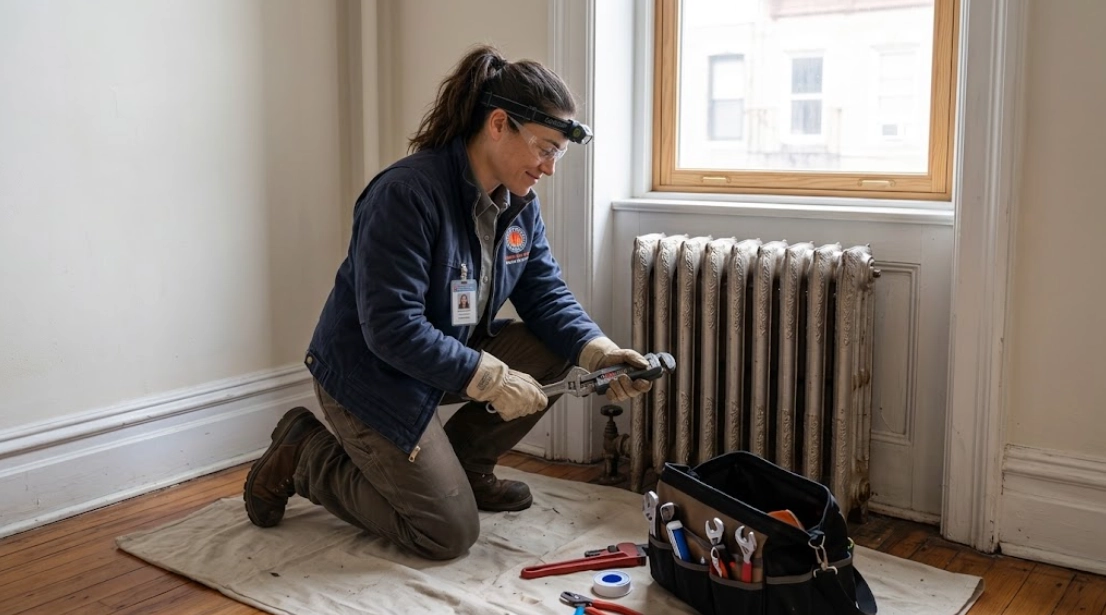
Common Steam Radiator Problems in Ocean Hill Properties
Steam heating relies entirely on pressure differentials and gravity. When a radiator malfunctions, several common issues are typically at play:
- Cold Radiator Bodies: If a radiator stays stone cold while others roast the building, the air vent is usually clogged with mineral scale or failed in a shut position, trapping cold air inside the iron sections and blocking incoming steam.
- Leaking Radiator Valves: Corroded packing nuts and deteriorated valve stems allow hot steam and water to seep out, damaging floors and ceilings below. A professional steam radiator valve replacement Ocean Hill Brooklyn restores a clean, tight seal.
- Violent Banging & Water Hammer: The alarming sound of banging steam pipes Ocean Hill Brooklyn residents often hear occurs when condensed water cannot drain back toward the boiler, colliding with high-speed steam.
- Improper Radiator Pitch: Over decades, wooden floors settle, causing radiators to tilt away from their supply valves. In single-pipe systems, steam and condensate share one pipe; if the radiator pitches the wrong way, water pools and causes spitting and hammer.
Why Changing a Single Valve May Not Fix the System
Many property owners replace an air vent with an arbitrary hardware-store model only to find the room now overheats or the pipe bangs louder. In steam heating, every radiator vent acts as an orifice in a balanced network. Faster venting on ground floors causes the thermostat to satisfy before top-floor radiators even warm up. Proper balancing requires matching vent capacities across the building and verifying basement main line vents are functioning properly.
Inspection & Repair Workflow
Our diagnostic approach begins by checking boiler steam pressure at the basement pressuretrol—which should ideally cycle between 0.5 and 1.5 PSI for residential properties. We then inspect horizontal branch lines in the cellar for sagging hangers that create low condensate pockets, check radiator pitch using precision levels, evaluate shut-off valve spud connections, and install properly sized thermostatic or orifice air vents.
When Radiator Issues Point to Broader Boiler Problems
If multiple radiators throughout your Ocean Hill building are spitting dirty brown water or banging in unison, the problem rarely lies in the radiators themselves. Often, contaminated boiler water with high oil content or excessive total dissolved solids is causing "surging" or "foaming" in the boiler vessel, propelling raw water into distribution risers. In such cases, professional boiler skimming and cleaning are required. Learn more about central heating troubleshooting on our boiler repair homepage.
Frequently Asked Questions
Answers to common radiator and steam heating questions in Ocean Hill.
The most common culprit is a stuck or mineral-clogged air vent. If air cannot escape through the radiator vent, steam cannot enter the cast-iron body. Other potential causes include a closed or broken shut-off valve stem, or incorrect radiator pitch trapping condensate.
Known as water hammer, this banging happens when incoming high-velocity steam collides with trapped, pooled condensate water in horizontal pipes or inside an unpitched radiator, creating acoustic shockwaves.
Steam radiator valves are threaded into brittle cast-iron spuds and operate under high temperatures and pressure. Attempting to force corroded valves can crack the radiator casting or break pipes inside walls, so professional repair is strongly recommended.
Continuous hissing or spitting water indicates the internal float or bi-metallic thermostatic element in the air vent has failed, or the boiler is overfilled or surging due to contaminated boiler water.